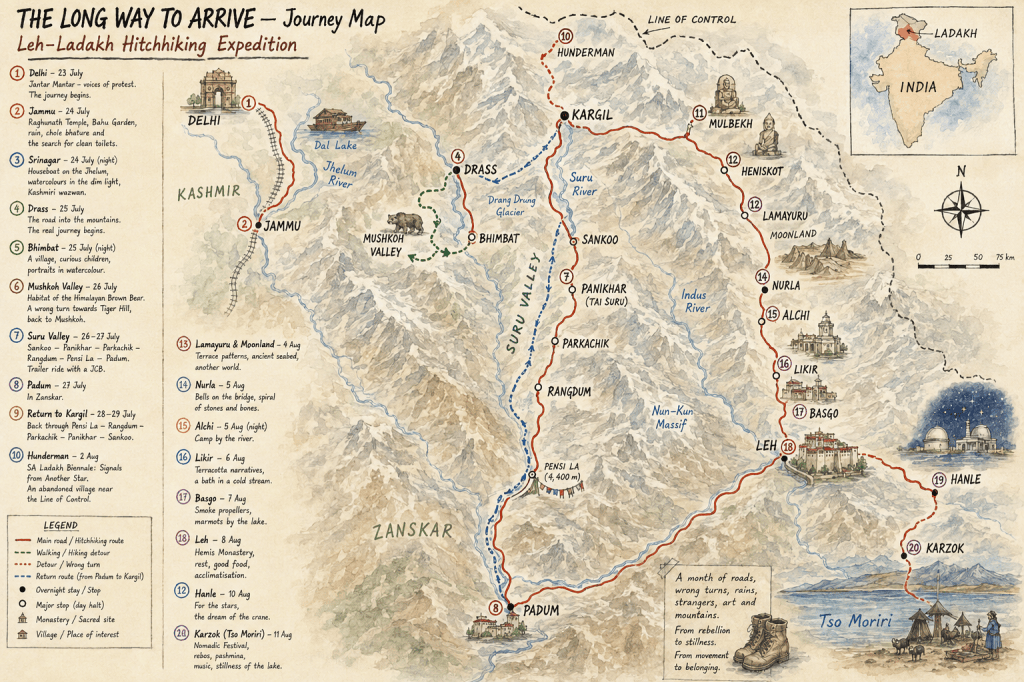
A Travelogue of the Leh-Ladakh Hitchhiking Expedition
As I unpack my backpack, I notice the dead skin flaking from the darkened skin of my forearm and the hardened palms that now look like a labourer’s. The hitchhiking expedition through the mountainous terrain of Leh-Ladakh, nearly a month long, has finally ended.
When I pull out the hiking boots, they release an intoxicating smell; like the hashish of Parvati Valley. Perhaps it comes from the grind that carried those miserable pairs to 15,000 feet above sea level and back.
They are more than footwear now. They have absorbed the dust of protest roads, the rain of Jammu, the cold nights of Drass and the long silences between rides. They have stumbled when I stumbled and held firm when the path disappeared. In their cracked leather and loosened laces lives a small, stubborn rebellion: the refusal to stay still, the choice to keep moving when comfort would have been easier.
For nearly a month, they had been moving because I could not stay still.
Now they rested in the late-monsoon air of Mumbai, the tension of my weight finally lifted from them. They could go home, sit in a corner and slowly wear out, having already done the harder work of carrying a restless body through a restless country.
But the journey had begun much earlier, at Jantar Mantar.
I. Rebellious Boots
My journey began in Delhi on 23 July. I stepped into the rubble of democracy and pulled out my tongue to taste the fearless voice of the young protesters. Their unanimous slogans and curses aimed at those in power stunned me. My laces undid themselves, as if the boots too had felt the sudden freedom in the air.
I let them be and walked on, confident that it would be all right—and that even if I stumbled, I had a brother beside me who would hold me up.
But I had a train to catch.
So I tied the laces again, binding the rebellion back into place for a while, and boarded the Jammu Tawi Express bound for Jammu.
Watching the protesters and the riot police in action, I began thinking about how easily duty becomes clouded by the absence of ethics and morality. The biggest opportunists are the politicians who feed on such chaos for their own gain. Dissent is the only clean way out- to say aloud that it is not okay to normalise corruption, especially the corruption of a nation’s youth.
In that moment, the old saying, “The pen is mightier than the sword,” suddenly made sense to me. The pen has paper and the spirit of writing as its allies. Yet no one can walk into a battlefield of modern arms and ammunition holding only a pen and expect to come out alive. The day that becomes possible, there will be world peace.
That night on the train to Jammu, these thoughts were still turning in my head when a statement from the Prime Minister appeared after midnight in Instagram reels. I could picture his pen gliding through the swear words directed at him- “Modi-fied” and generalised.
But pen fights are never fought with swords.
My boots sat heavily by the berth, still damp with the dust of the protest ground, waiting for the next stretch of road.
It was raining when I arrived in Jammu. I had another train to catch at noon, this time to Srinagar. I put on my raincoat and began walking through the water-filled streets towards Raghunath Temple, the boots taking in the rain as they had taken in everything else.
I visited the temple to seek blessings for a successful journey. Afterwards came a hearty breakfast of chole bhature served on leaf plates. Then came the familiar search for a clean public toilet—a regular task of the journey that I had eventually grown used to. The Ladakhi-style ones, I would later discover, were harder to get accustomed to.
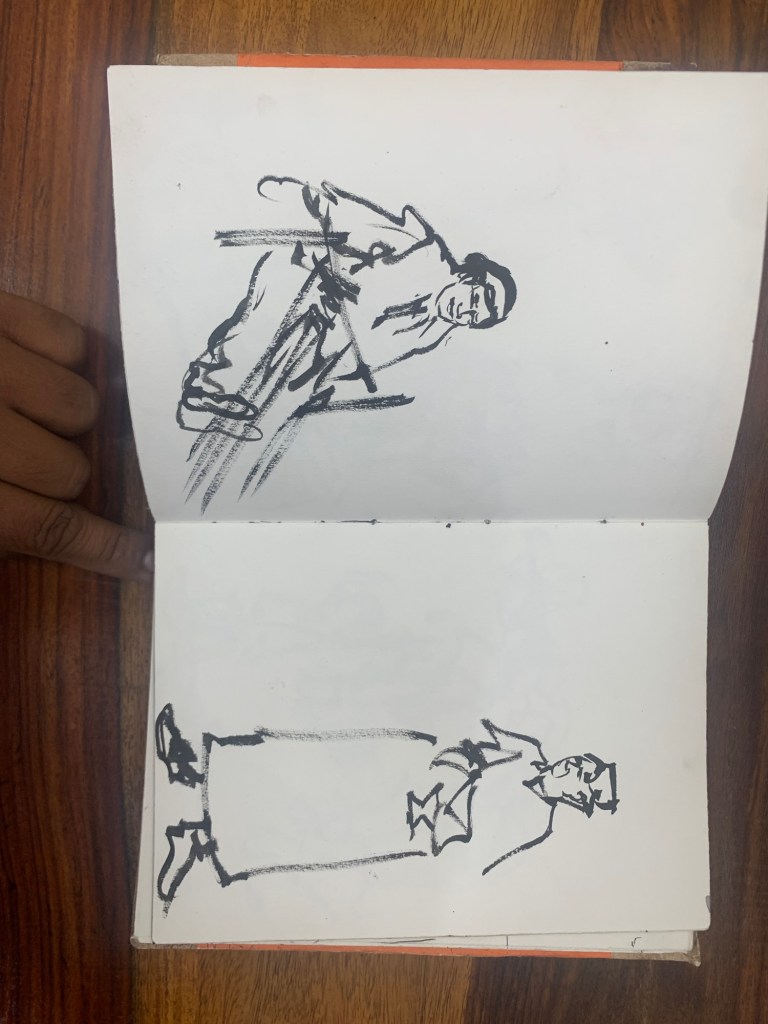
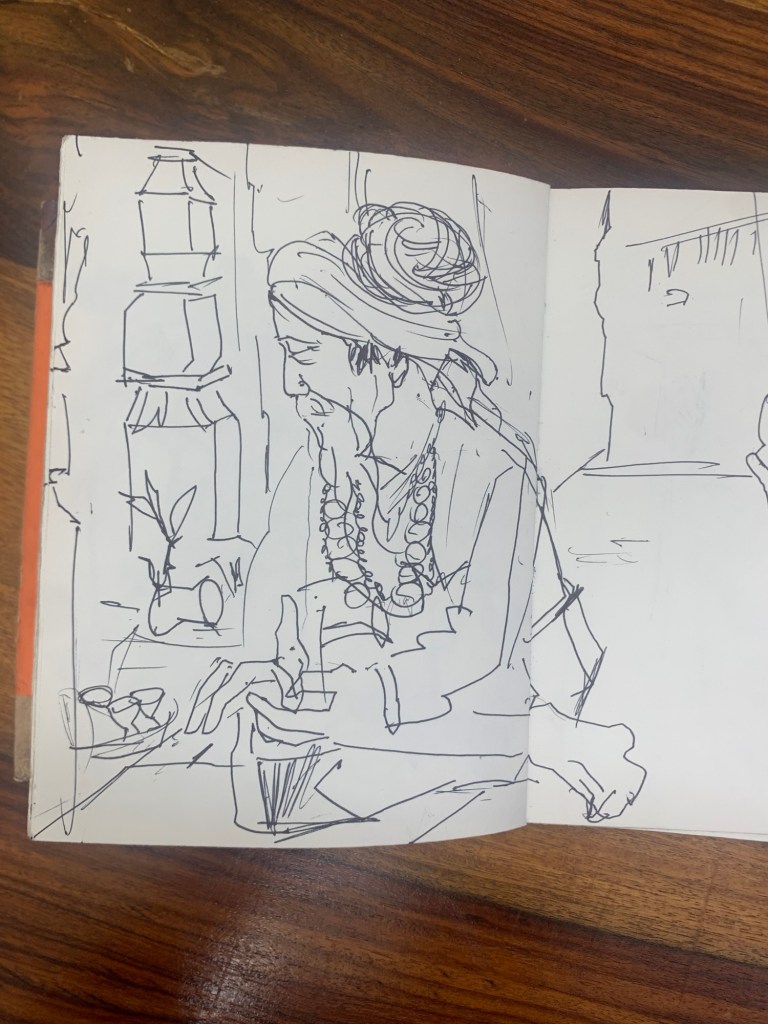
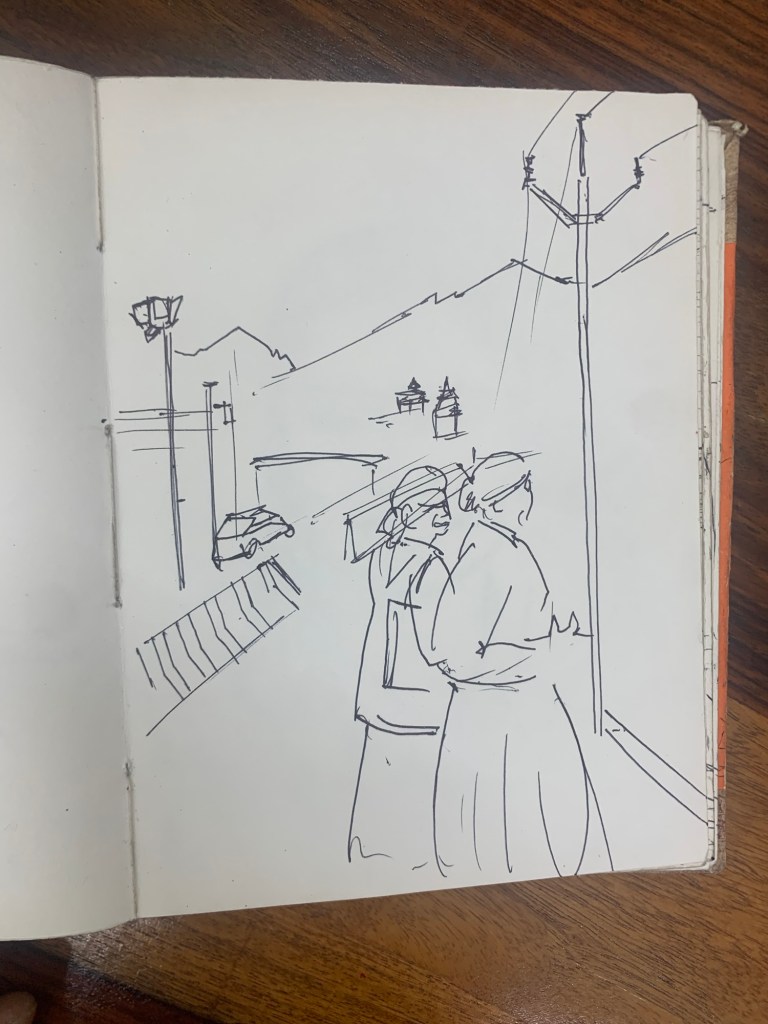
After relieving myself, I went to Bahu Garden. From under a shed, while the rain continued to fall, I painted my first watercolour of the city.
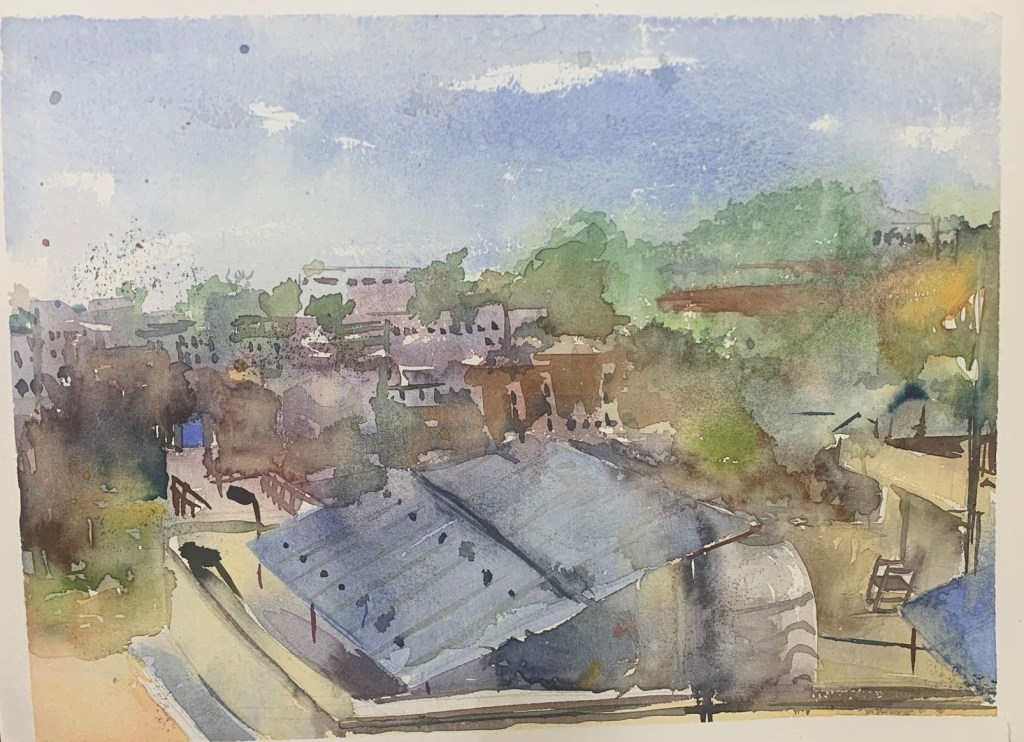
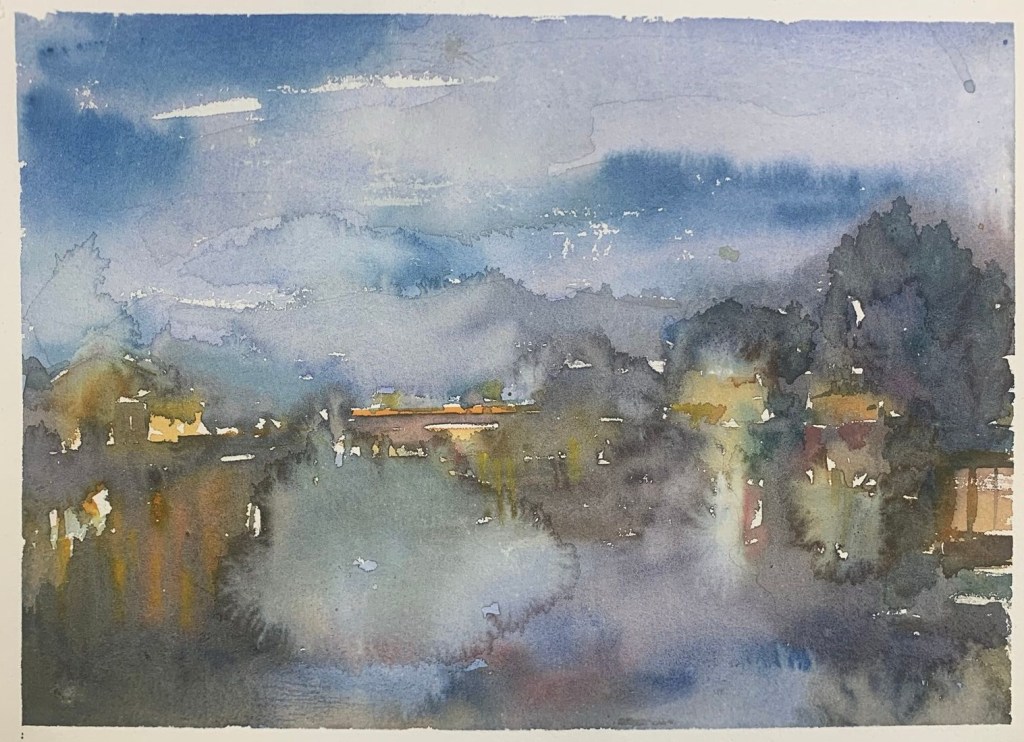
The boots rested beside me, dark with rain, already impatient for the next movement.
Then I hurried to the Srinagar railway station, passed through three levels of security and finally managed to board the Vande Bharat on time.
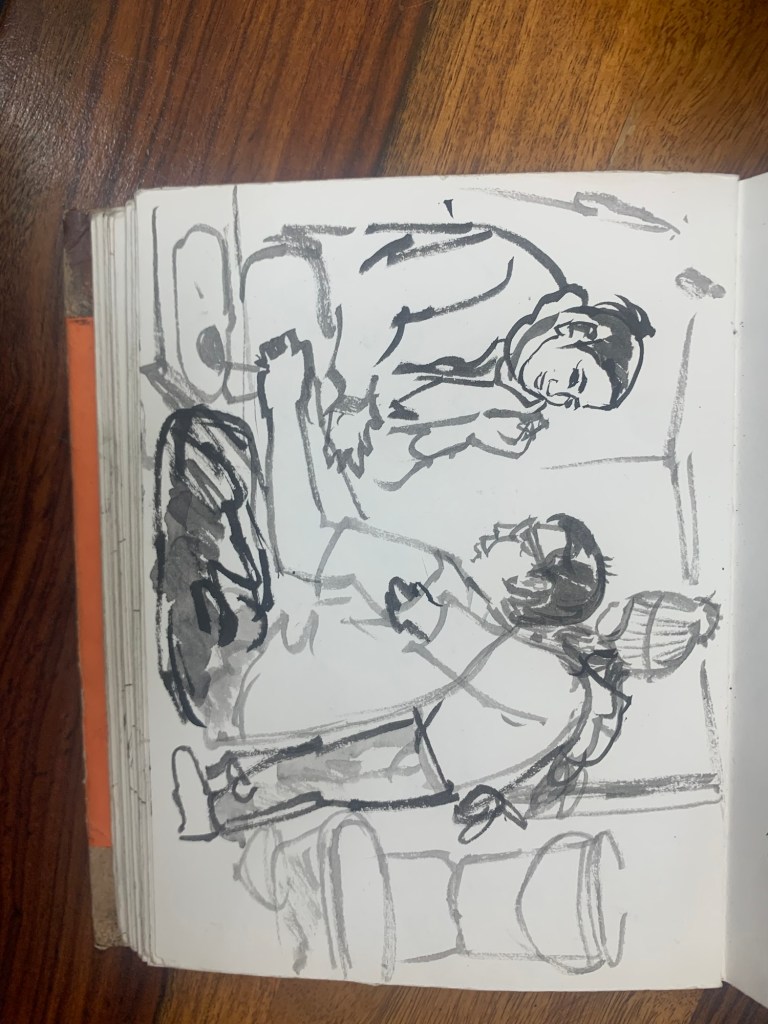
I stayed one night in Srinagar, on a houseboat on the Jhelum. The wooden floors creaked softly beneath my feet, and the air carried the damp, slightly pungent smell of river water mixed with old varnish. In the short time I had, I sat on a bench facing the dark river and painted in the dim glow of a single bulb.
The water lapped quietly against the hull. Somewhere in the distance a dog barked and was answered by another.
Later I ate Kashmiri wazwan- rich, fragrant and heavy with spices that lingered on my tongue long after the meal- and then called it a night.
My boots stood near the door, still holding the shape of the miles behind us and the shape of the miles still to come.
The next morning I continued towards Drass.
And somewhere beyond Srinagar, the journey stopped being about getting from one place to another. It became about finding out how far I could go without a plan.
II. Hitchhiking Through the Mountains
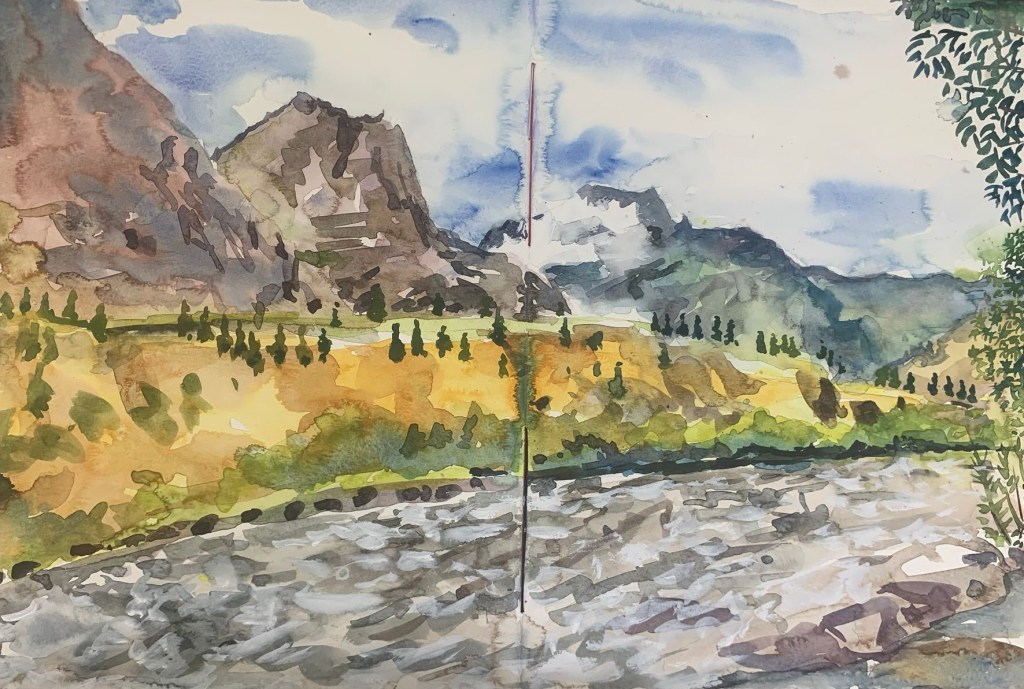
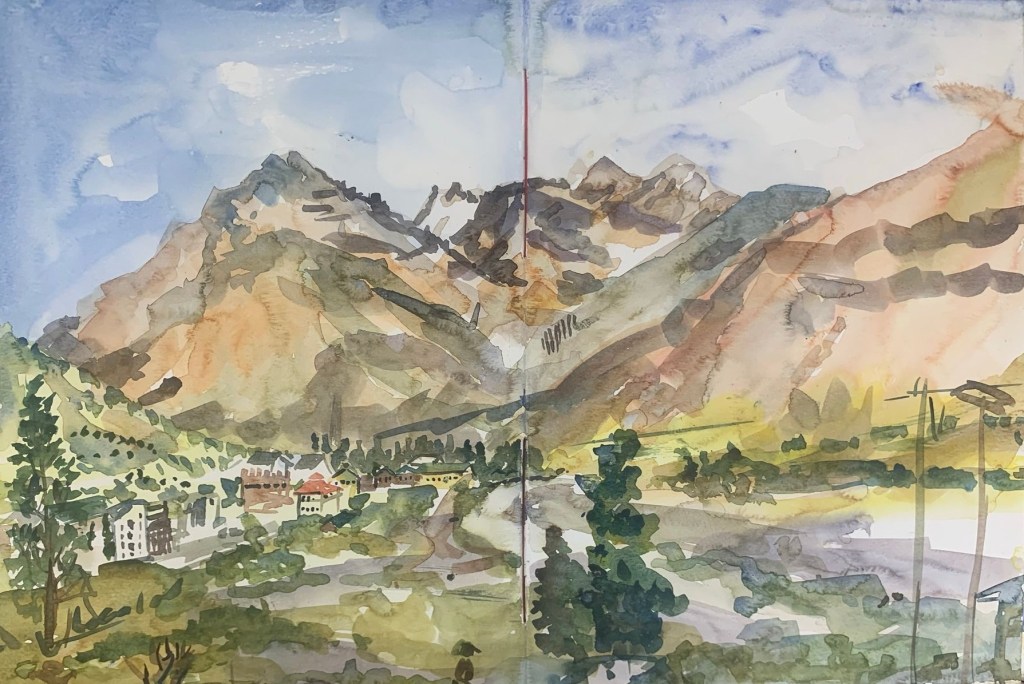
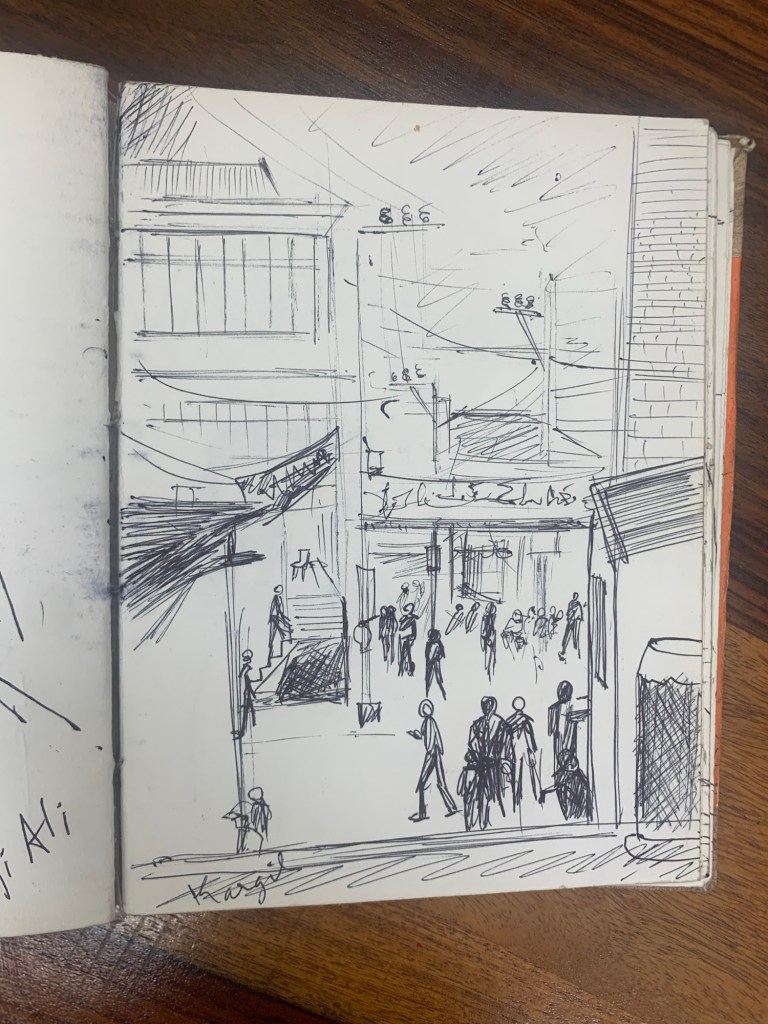
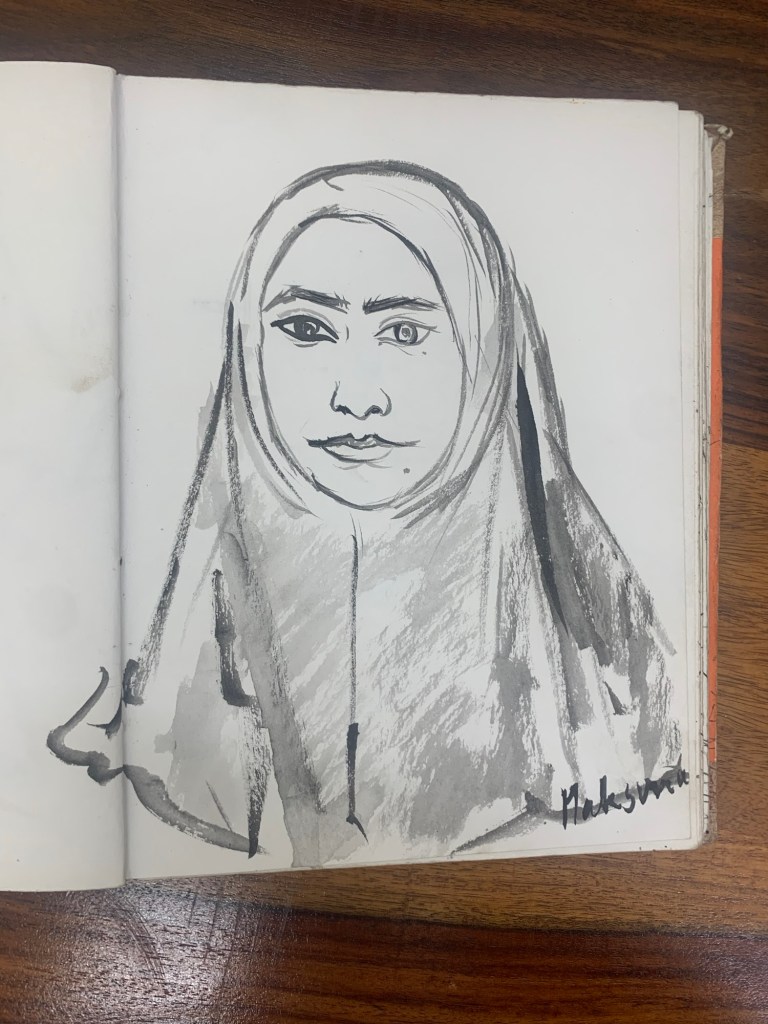
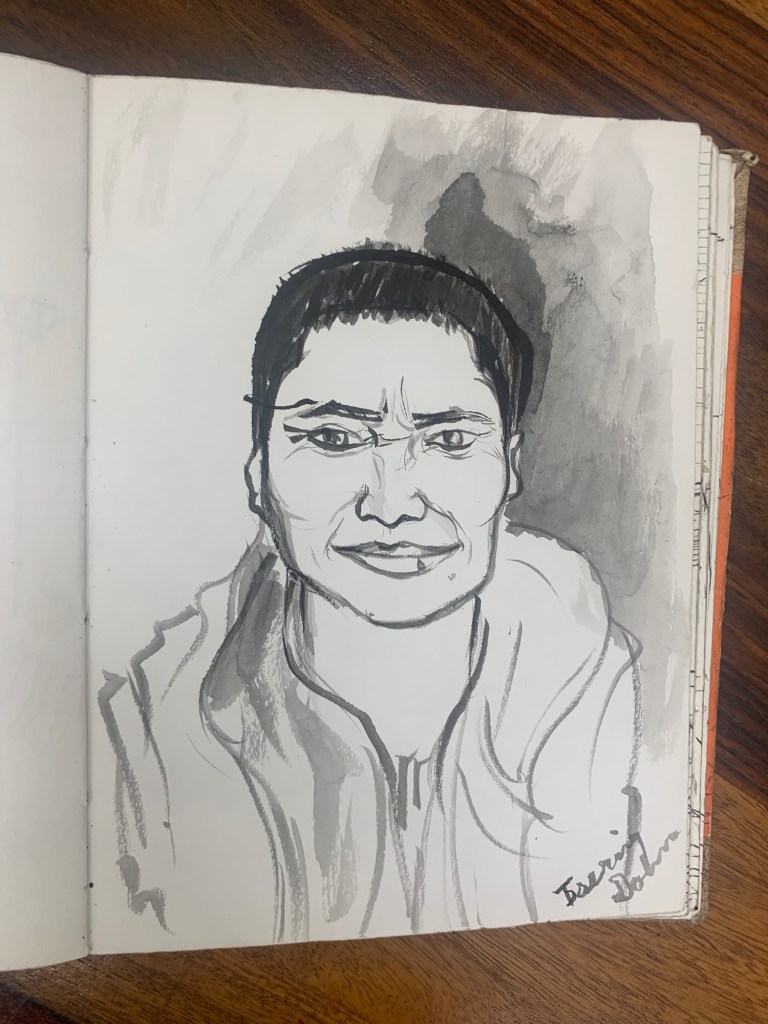
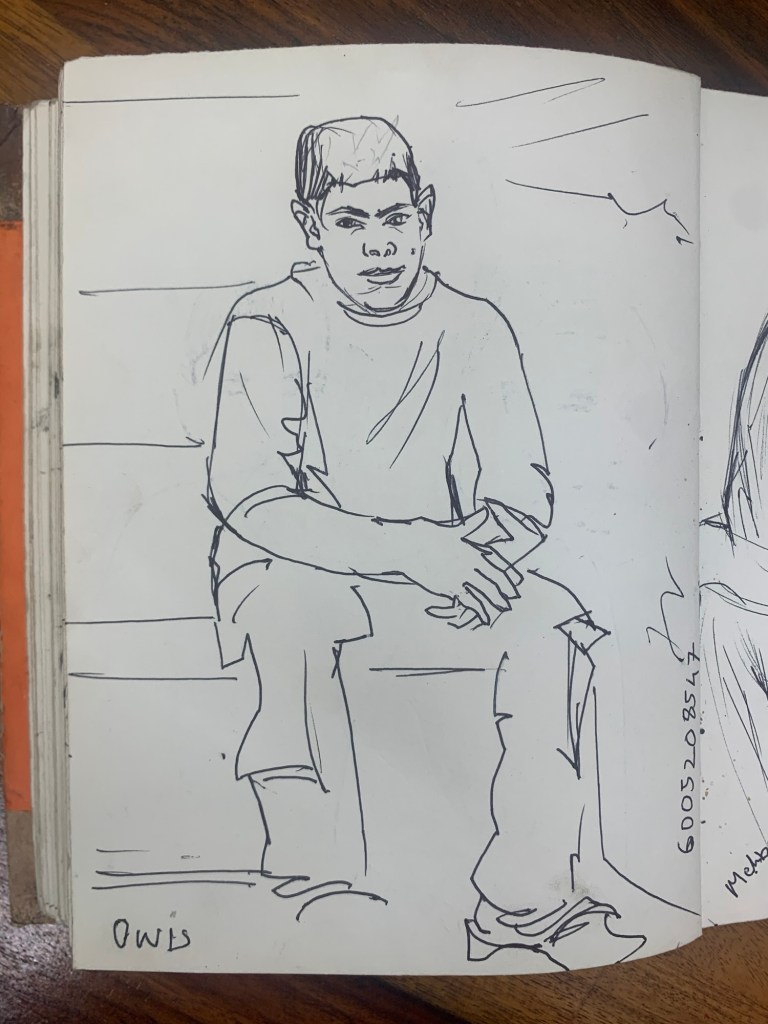
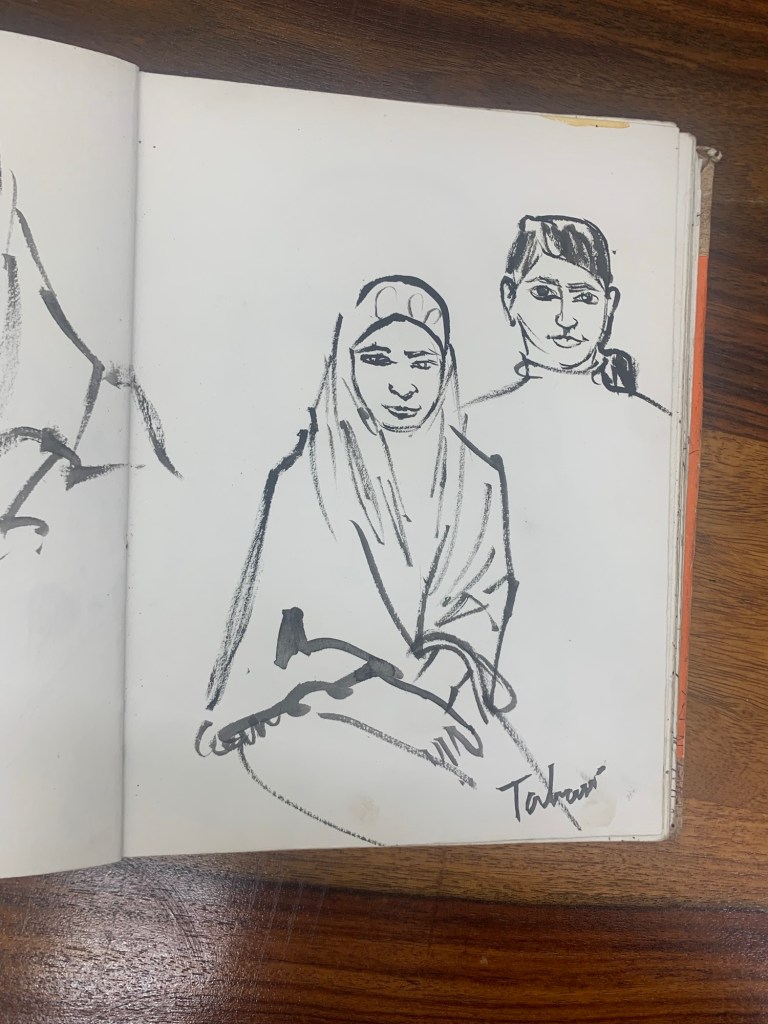
In Bhimbat, where I camped, there was a beautiful village belonging to the Muslim community. I painted a watercolour, and children flocked around me, eager for their portraits and genuinely curious about what I was doing.
There was something comforting about their curiosity. They did not need an explanation for why a stranger had arrived with a sketchbook. They simply wanted to see themselves on paper.
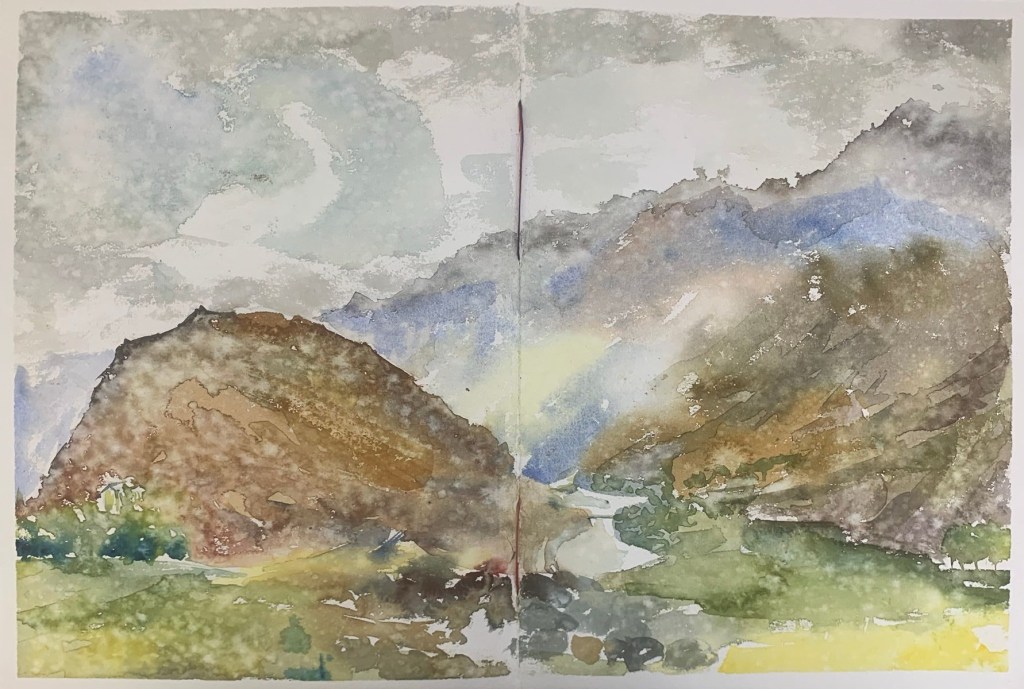
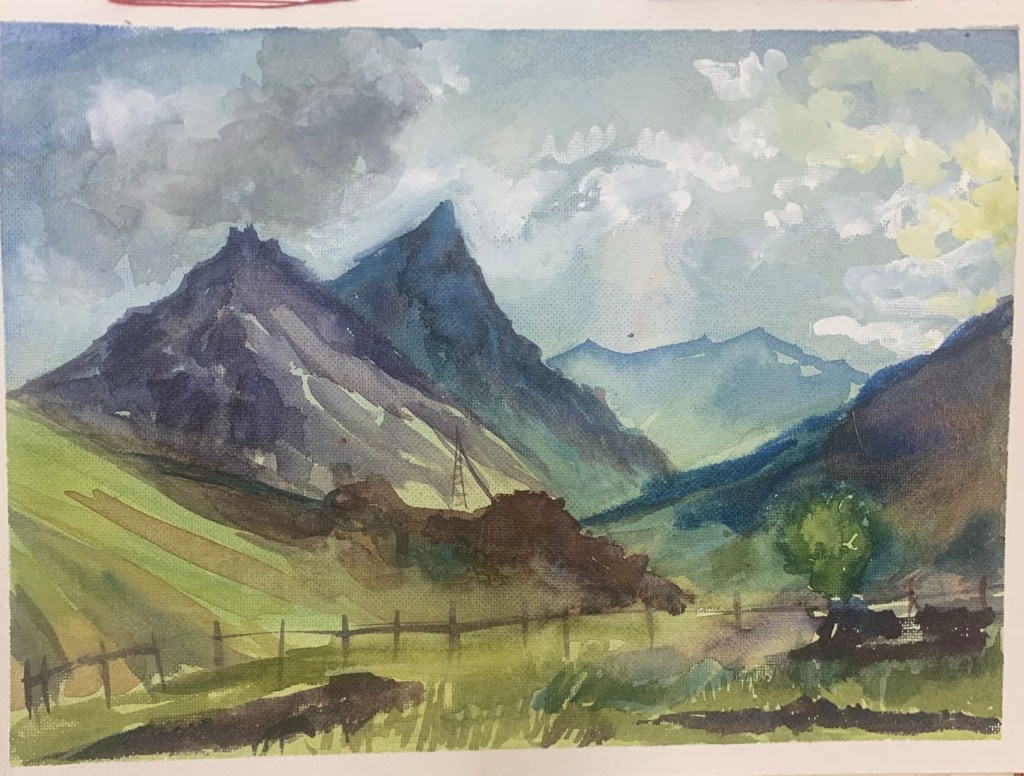
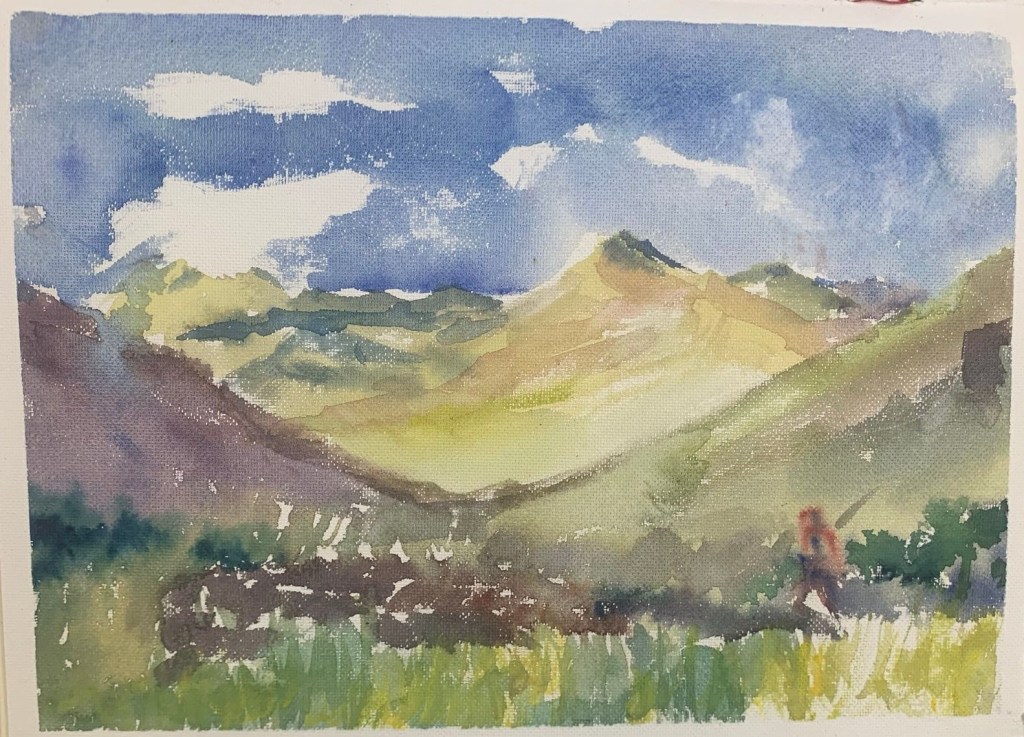
On 26 July, Kargil Vijay Diwas, I went to Mushkoh Valley, a known habitat of the Great Himalayan Brown Bear. Because of the bears, I could not pitch my tent outdoors and had to camp on the balcony of a guesthouse.
I chose to walk the whole way from the Drass taxi stand.
Midway, I stopped to drink water, set the boots aside and pulled out my sketchbook. Children gathered again, and I drew their portraits one after another. When I finished, I tightened the laces and walked on.
The road was under construction, so I decided to cut up the mountain, thinking it would lead straight to Mushkoh.
Higher and higher I climbed.
The valley opened below me until a man finally told me I was on the path to Tiger Hill, not Mushkoh. If I continued, I would reach only a high meadow where horses grazed.
I turned back.
The descent was harder than the climb. Loose gravel and sharp chips of rock slid beneath my feet. I skidded and slid, stones in both hands, weight on my hands and heels, the boots digging in and holding wherever they could.
At last I reached the road again and entered Mushkoh.
By then I had begun to understand the particular logic of this journey: the wrong road was not necessarily a mistake. Sometimes it was simply another way of seeing the landscape.
From Mushkoh the road led me deeper into the Suru Valley and towards Zanskar. Reaching Padum took three stops—Sankoo, Parkachik and a long stretch of walking and hitchhiking.
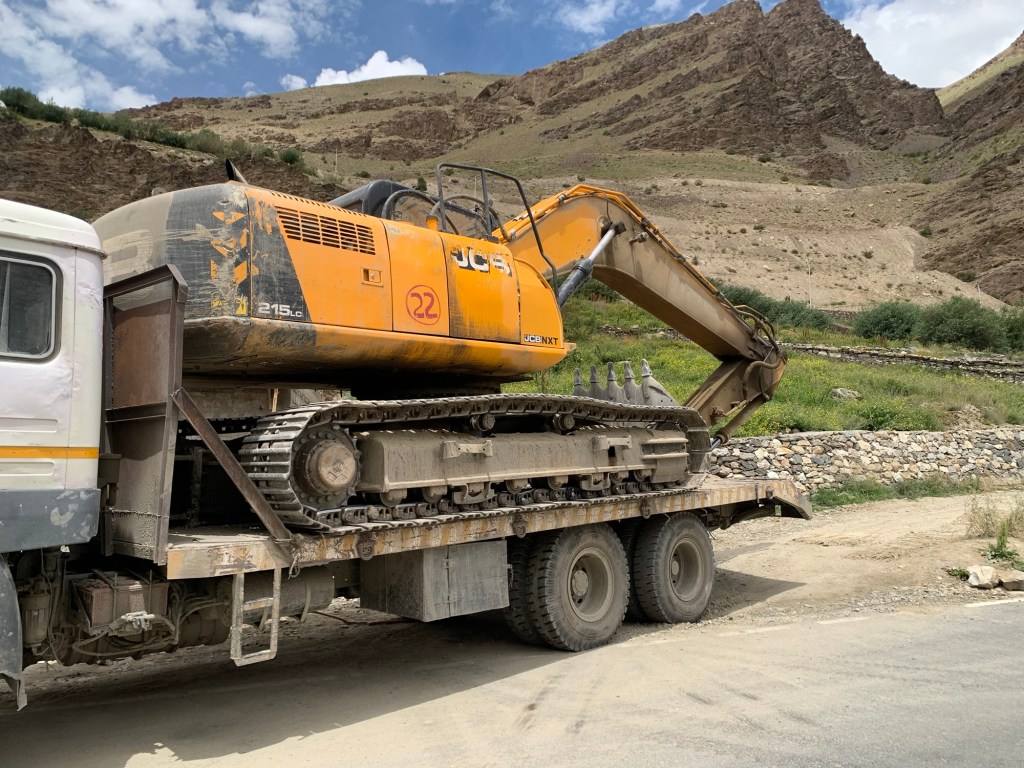
At one point I rode on a trailer that later picked up a JCB. It carried me as far as Icher before I was dropped back towards Padum.
There was something strangely liberating about travelling this way. I never quite knew what vehicle would stop, where it would take me or where I would sleep that night.
The uncertainty, which would have been anxiety on an ordinary trip, had somehow become freedom.
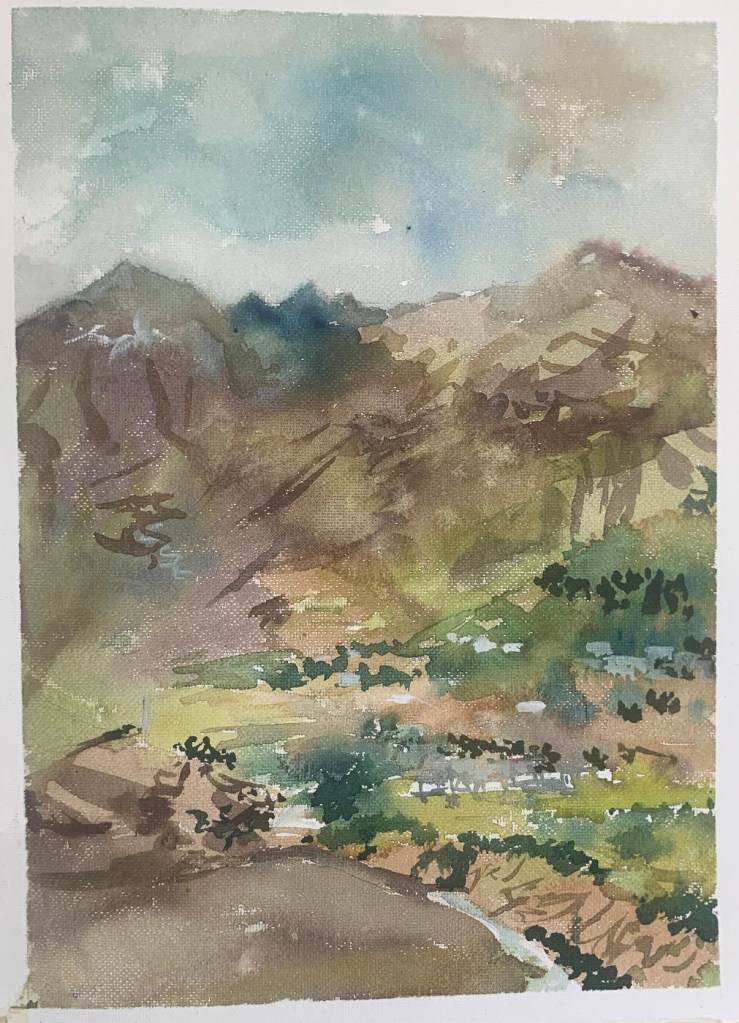
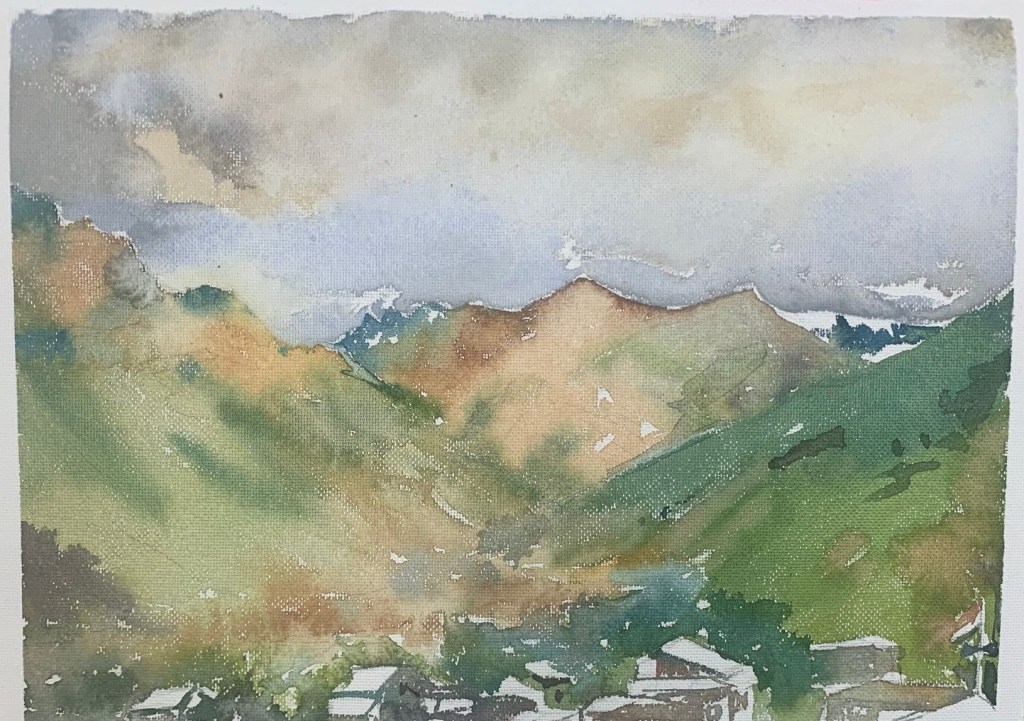
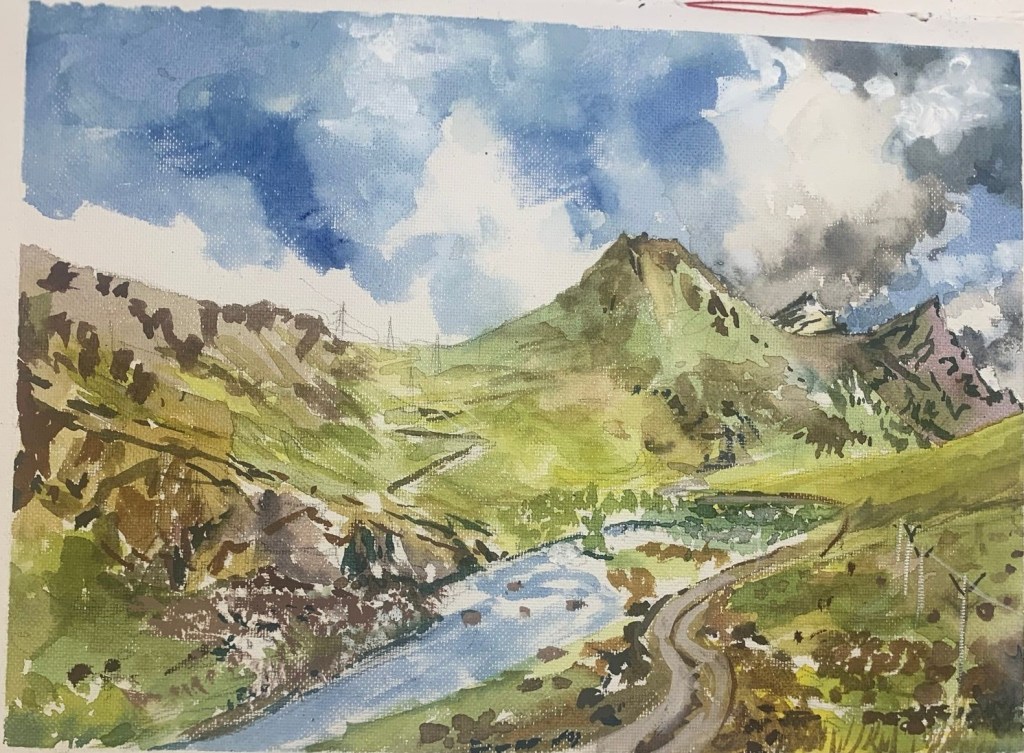
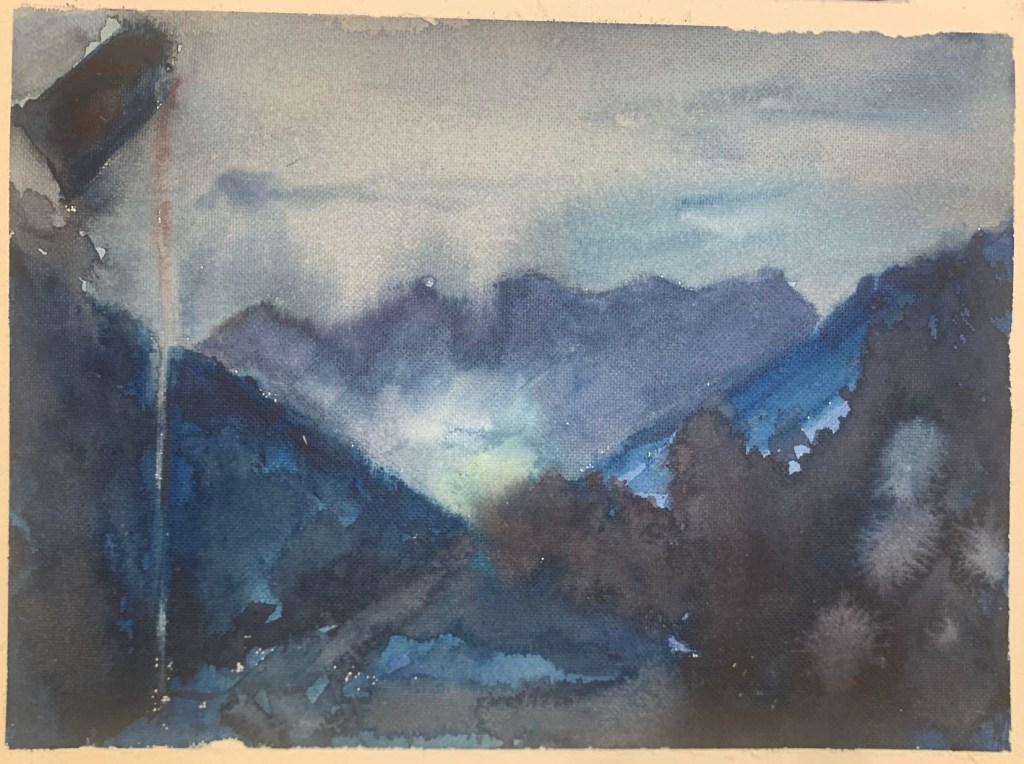
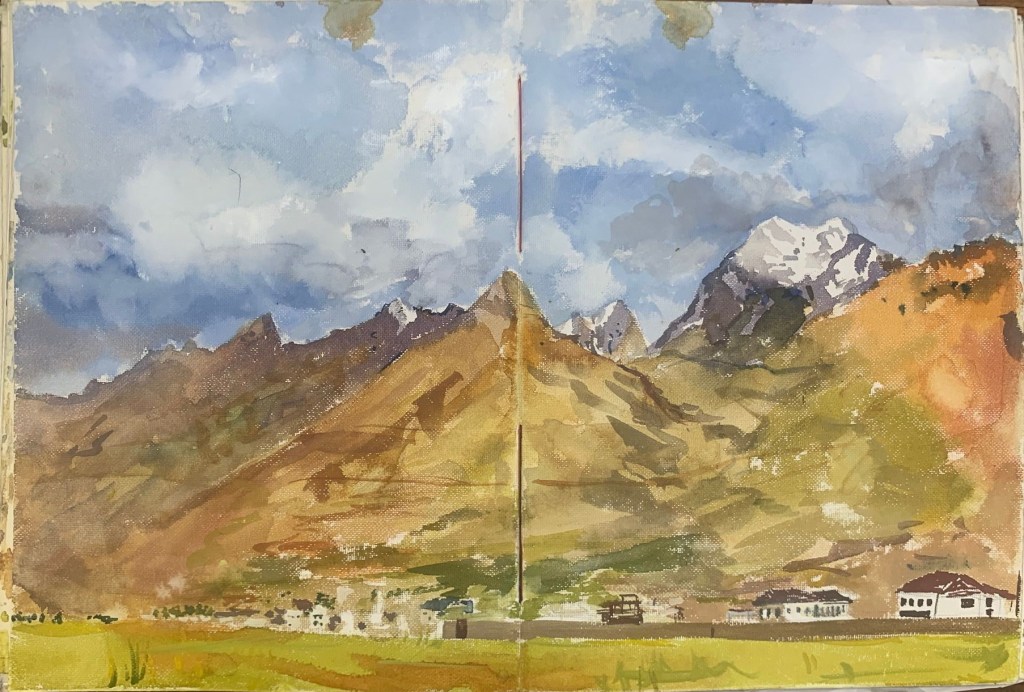
From Padum I turned north again, returning to Kargil.
By then, the boots had become a kind of map. Their soles knew the gravel better than I did; their loosened laces marked the places where I had climbed, stumbled and started again.
I returned to Hunderman.
This time I was not simply passing through.
I had come to see the SA Ladakh Biennale.
III. Growing Antenna in Boots
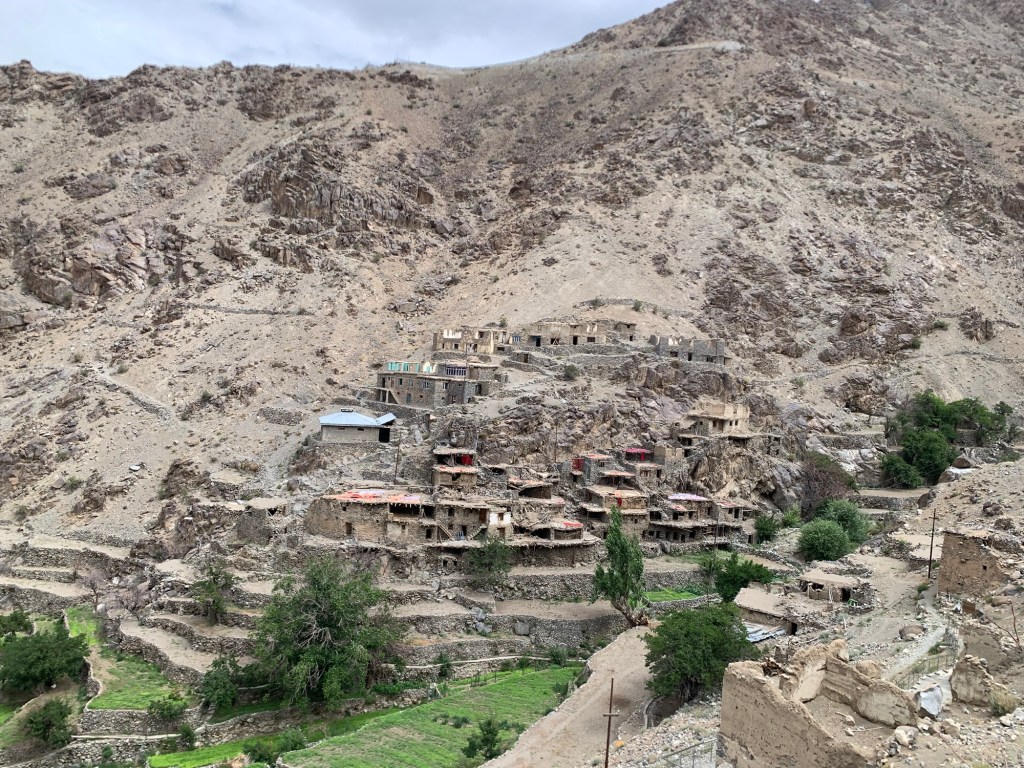
The expedition had originally been planned around the SA Ladakh Biennale, titled Signals from Another Star. On 2 August, I found myself striding up the hill to Hunderman from the Kargil bus stand- an abandoned village near the Line of Control.
The location itself seemed to make the idea of the Biennale more intriguing. Hunderman is close to a border that has divided communities and landscapes for decades. The village carries that history in its silence, its abandoned structures and its proximity to a line that is invisible from some places and intensely present from others.
I chose to walk the whole way, to go through the grind.
The path was steep and meandering. I covered more than ten kilometres. Every time I tried a shortcut, loose gravel sent me skidding, so I returned to the paved road and finally reached the site on foot.
The boots took the punishment without complaint, their soles grinding against the stone, their laces slowly working themselves loose with each climb.
The moment I saw Hunderman, I was reminded of a similar space in The Seed of the Sacred Fig—the last scene, where the family finally meets the father they have been running from.
As I walked across the terraces, I had to place each step carefully so my feet would not sink into the loose surfaces. The sheds had been closely knit by the artist, like a tapestry spread across the terraces. The whole site had been transformed by these weaves; a strange synchronicity and fluidity had been achieved within the impermanence.
I might have reached the destination after a long and strenuous journey, yet the journey only truly begins when you arrive at the sites.
There is always more to explore.
As you climb from the bottom to the top, the full perspective opens.
Kudos to the artist.
Something eased in me there.
The weeks of walking, the dust, the protests, the rain, the repeated tying and untying of laces- all of it had been slowly wearing away a kind of inner resistance.
Until Hunderman, I had still been carrying the noise of the city and the weight of unfinished thoughts. Standing on those woven terraces, looking out across the abandoned village and the invisible border beyond it, the noise thinned.
What remained was a quieter attention.
The boots registered it first. Their laces settled into a new tension, their soles resting differently on the ground, as if the body had already begun to adjust before the mind caught up.
From Hunderman I took a bus to Mulbekh Monastery.
The standing Buddha there is a monolith nearly thirty feet tall. Two site-specific works had been installed beside it. One sent long horizontal strips of black and white running across the mountainside—gigantic, almost as imposing as the Buddha itself.
The other was a geodesic dome made from biodegradable plastic and medicinal plants found in Ladakh.
It began to rain.
The artist and I had to cover the dome ourselves. The wet plastic grew slick and heavy in our hands. Rain ran down the back of my neck; the boots sank slightly into the softening ground.
While we worked, a stranger looked at me and said I must be either very spiritual or simply mad to be camping and travelling this way.
I wasn’t sure which.
That night I camped in the courtyard of a guesthouse, the boots still wet beside the tent flap.
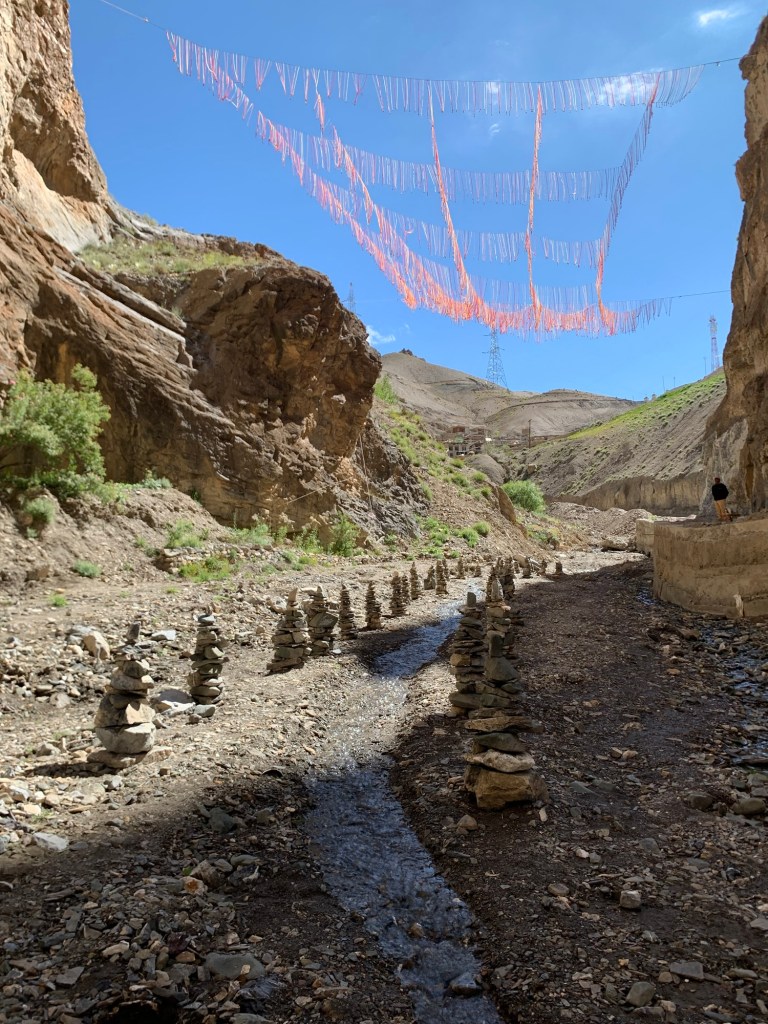
The next morning I went to Heniskot, where the artist welcomed me with butter tea and sandwiches. Amid the gorge, underneath a metal bridge, stood a kind of scaffolding- an attempt to bridge the gap that mankind had created.
Another work marked the depletion of water sources. Above it the sky loomed large, threaded with the yarn of global warming.
Afterwards I hitchhiked on a truck to Lamayuru.
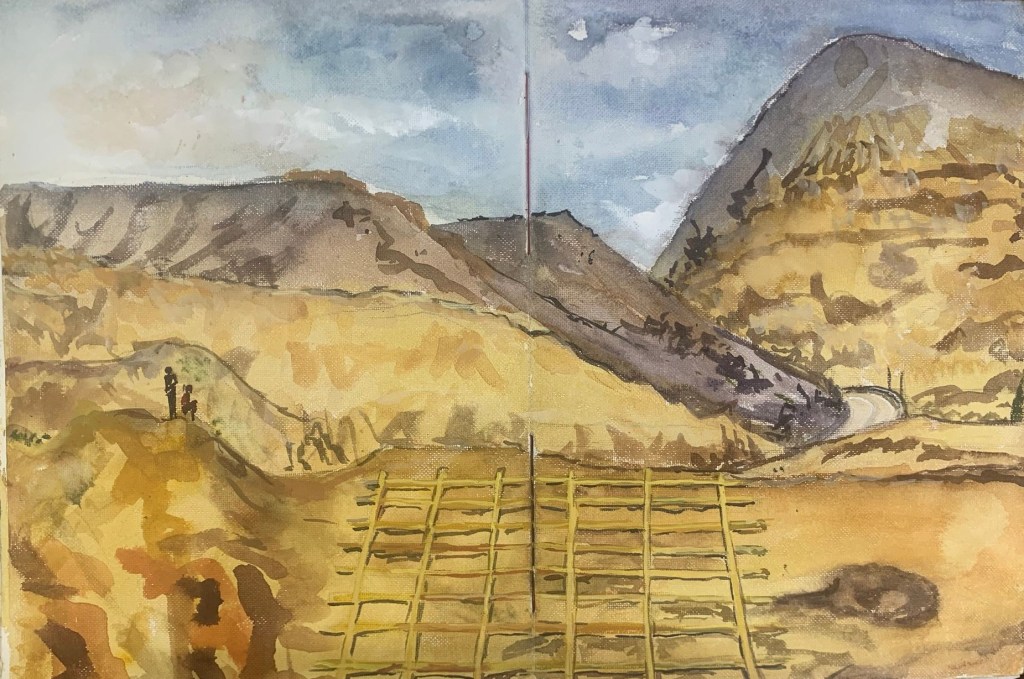
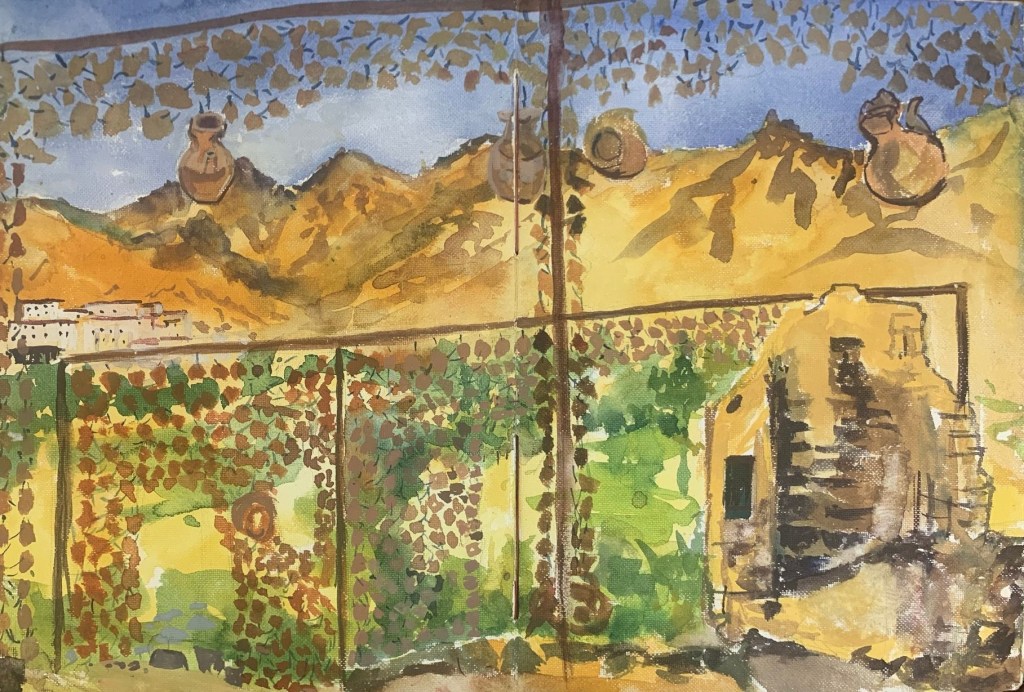
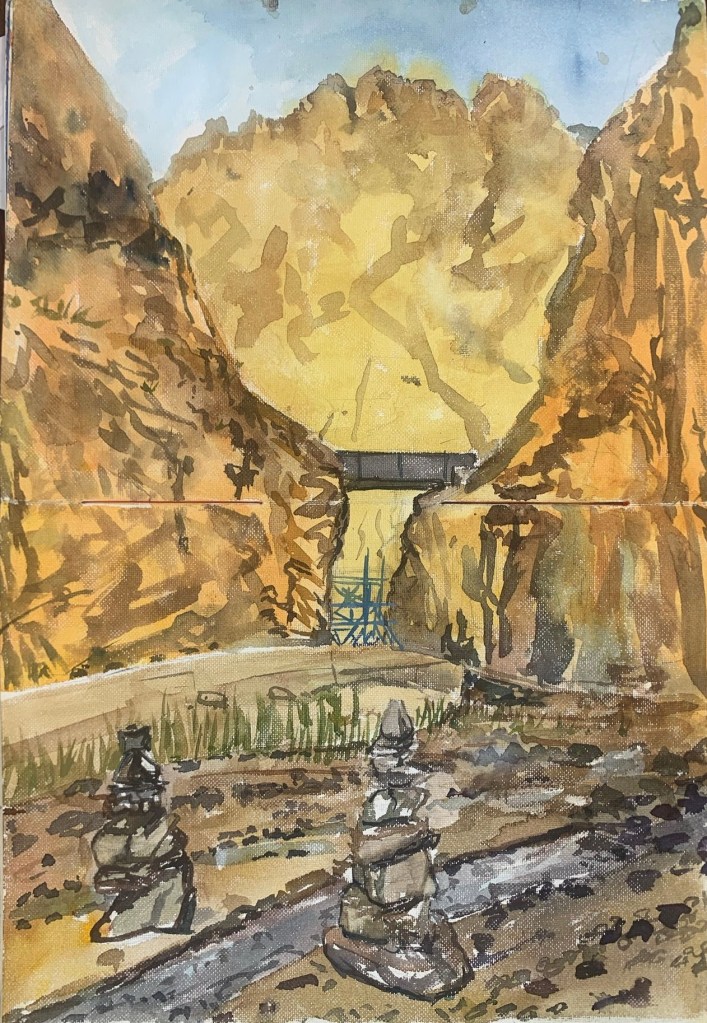
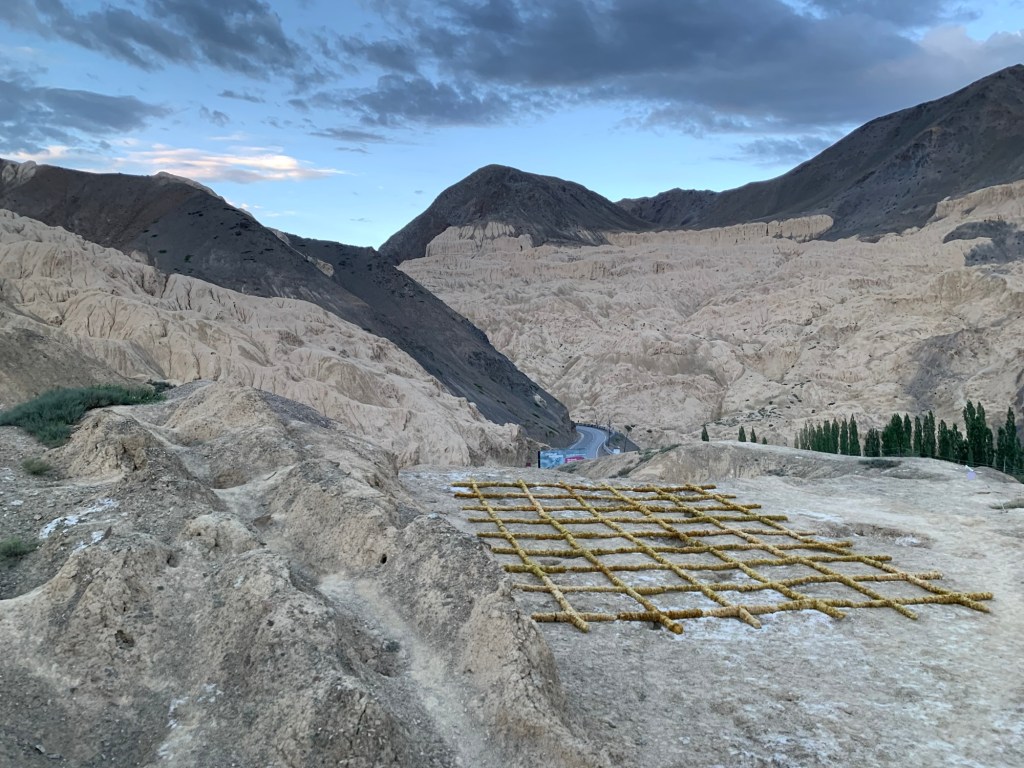
Even after being dropped, there was still a long climb to the sites. A visitor who had also come to see the works gave me a lift up to the monastery, from where we could look down at one of the installations: two patterns laid out on adjacent terraces.
From there we continued to the other two sites in Moonland.
Moonland is said to have lain under the sea or a lake in the ancient world, and the landscape still seems to carry that memory. The terrain is unlike anything else—raw, folded and strangely sculpted.
Its colours and textures are peculiar, desert-like, as if the earth had been drained of everything soft and left only bone and dust.
The landscape seemed to demand a slower eye.
The next morning I took a bus to Nurla.
One old bridge had been fitted with bells that jingled with the river and the wind. The other work was a spiral of rocks and stones with bone remains embedded among them.
From Nurla I went on to Alchi and camped for the night.
The following morning I continued to Likir, where the site-specific works used terracotta- a traditional material of the region- to construct a narrative.
On the way down to the highway, I took a longer path and found a secluded stream.
I took off my clothes and bathed.
The water was cold and clean.
Afterwards I felt so light I could have run.
That feeling did not last long.
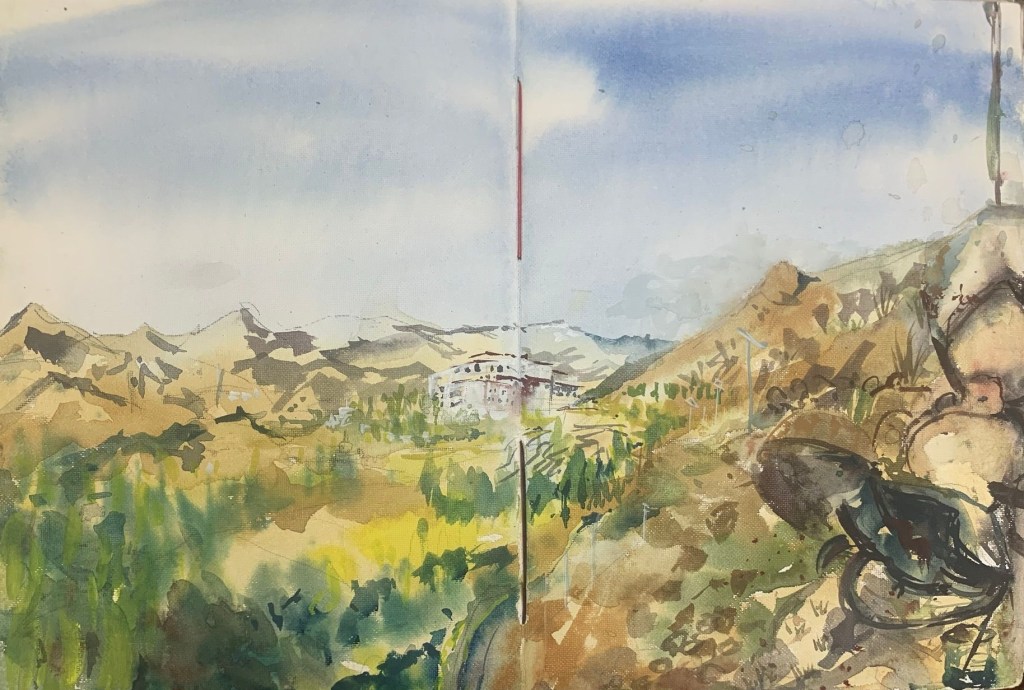
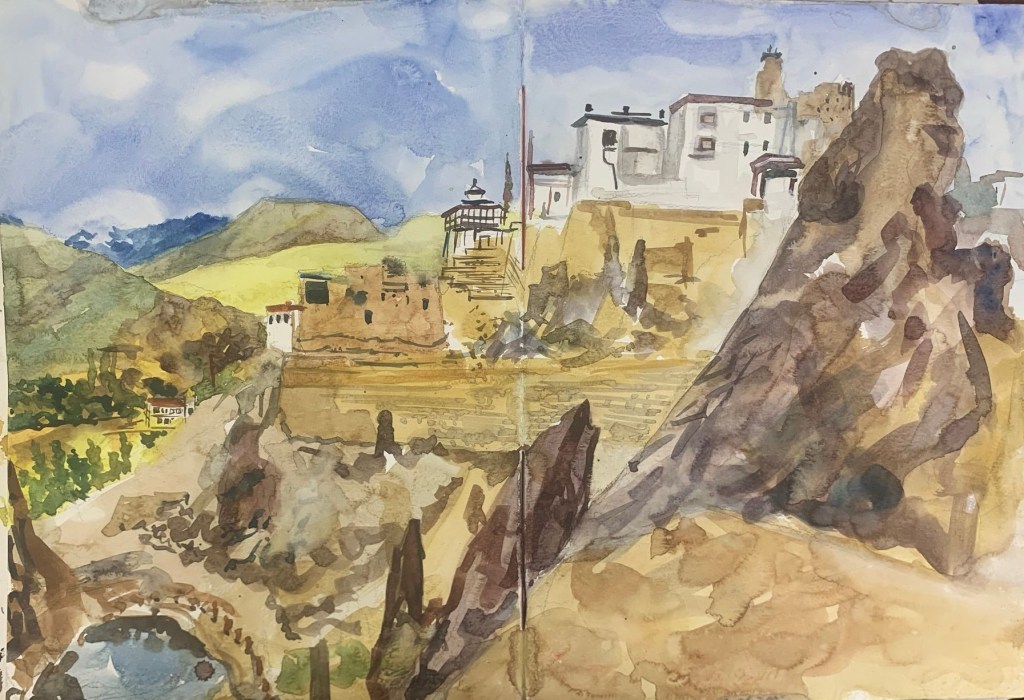
The same day I travelled on to Basgo, catching a lift in a private car. By the time I reached the village it was already dark, so I pitched my tent on an elevated spot beside the road that climbs to the monastery.
Finding a dhaba for dinner and then locating my tent again in the dark had become a regular night-time task.
I unlaced the boots and set them beside the tent pole.
They had carried me far enough for one day.
The next morning I went up to Basgo Monastery. One site had been made active with smoke propellers; the other displayed marmots gathered around a lake.
From Basgo I went on to the final site, Leh.
There I did not visit all the works, nor did I spend much time with the ones I saw.
I already had other plans.
By then, the Biennale had become more than a collection of artworks scattered across Ladakh. It had become a way of understanding how art interacts with landscape and topology—and how I myself interacted with both.
The long journeys between the sites were as much a part of that experience as the works themselves.
The boots had been part of that interaction all along: measuring distance, absorbing weather, adjusting to each new surface and quietly recording the shift from restless motion to a steadier presence.
After more than two weeks of continuous travel, I needed to stop.
From Leh I visited Hemis Monastery, a massive complex with a fine collection of art and artefacts. The monastery, one of Ladakh’s important Buddhist centres, held a different kind of quiet from the abandoned spaces I had just come from.
I spent two nights in town, eating at good restaurants and acclimatising.
In the evenings I left the boots by the door of the guesthouse.
For the first time in days, they looked almost at rest.
But I was not done travelling.
IV. Hitchhiking to Nomadic Life
From Leh I went to Hanle for the stars.
On the way, a kiang—the Tibetan wild ass—cantered parallel to our bus, its mane streaming back, water splashing at its feet. Another stood quietly watching.
These wild horses seemed to welcome us simply by being there.
Hanle is also home to the black-necked crane. I had planned to rise early to look for them, but the dream I had that night of the crane was so vivid and complete that I felt no need to wake for the real sighting.
The next morning I continued to Karzok for the Nomadic Festival near Tso Moriri.
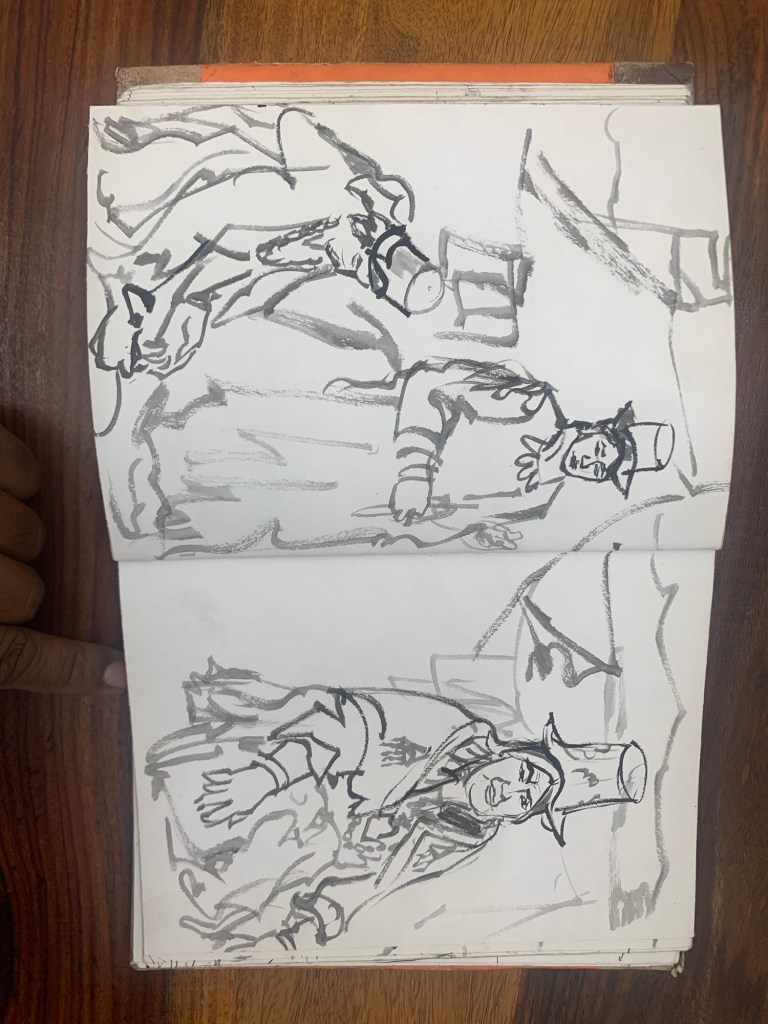
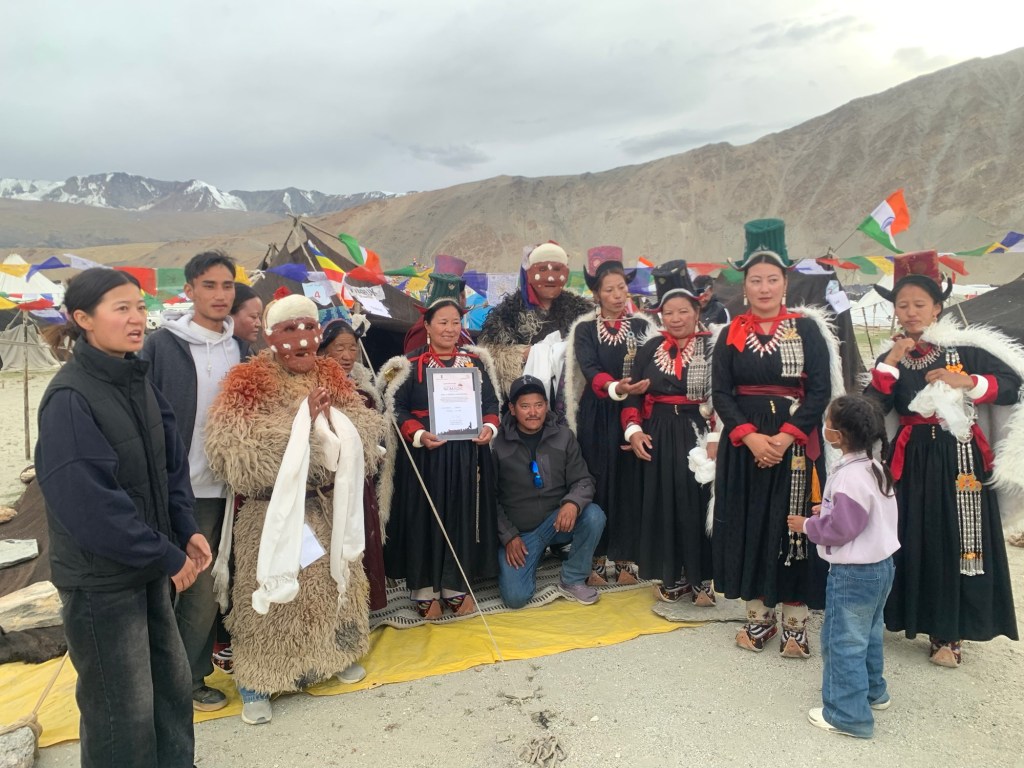
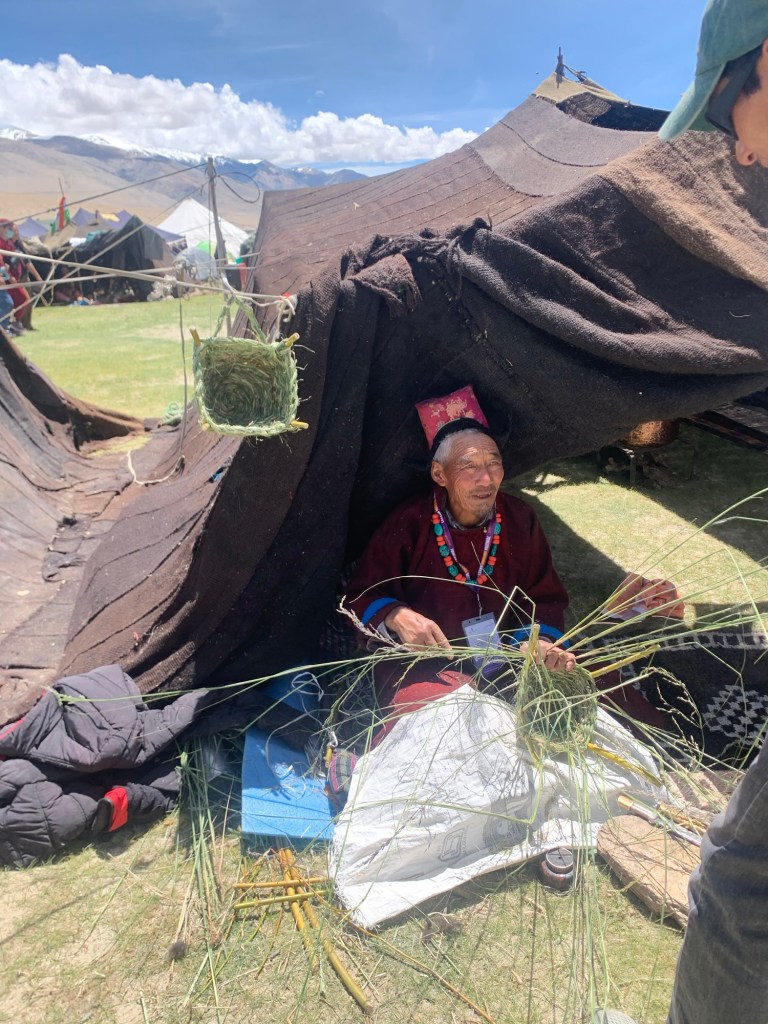
At Karzok, the Changthang communities had gathered. Tribes from across the high plateau arrived in traditional dress—woollen gonchas, fur-lined coats, turquoise and coral jewellery catching the light.
Black yak-hair tents, the rebos, stood in rows. Inside them was the simple order of nomadic life: earthen stoves, skin bags for churning, worn utensils, the faint smell of smoke and wool.
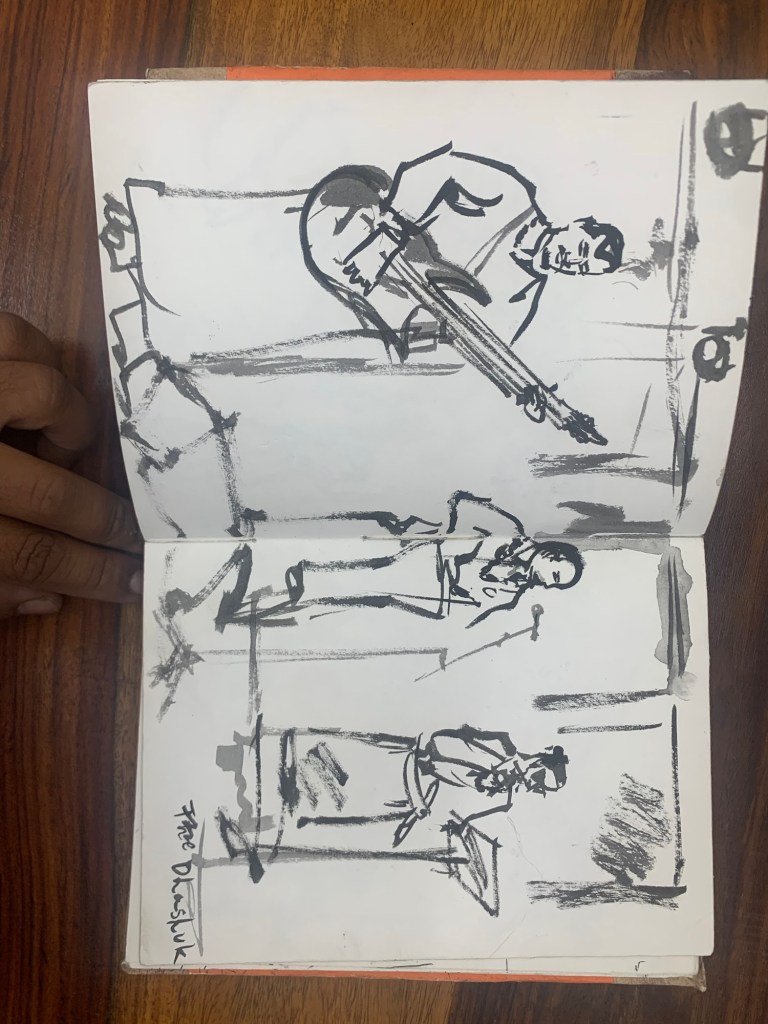
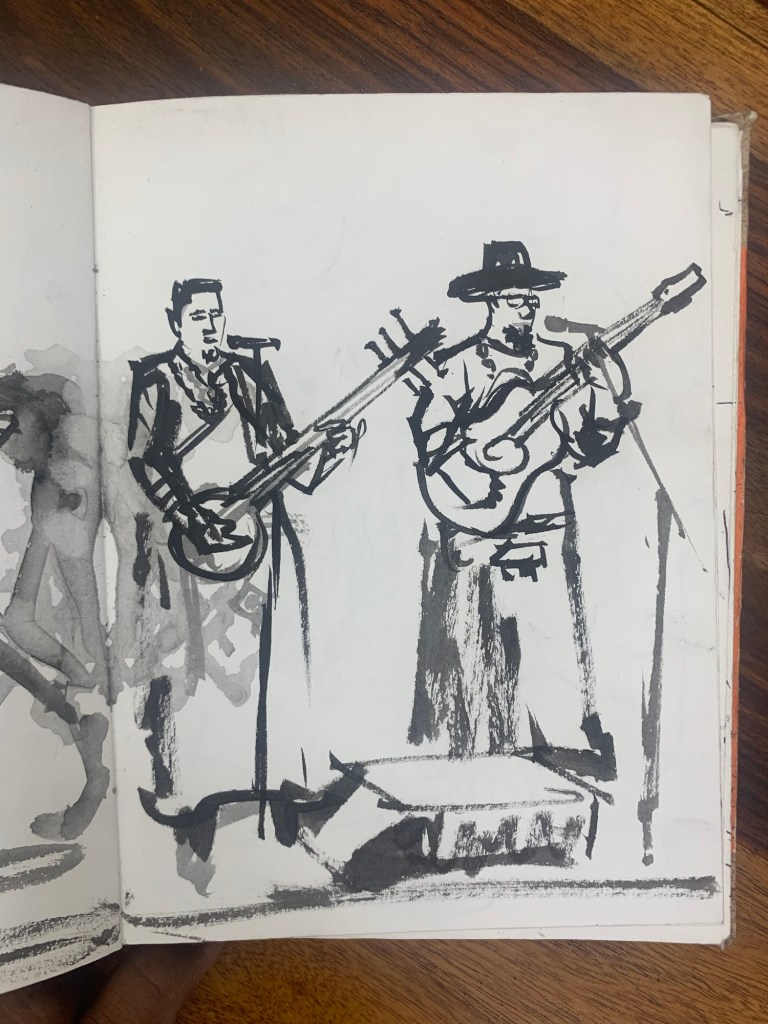
There was music and dance, the sound of drums and stringed instruments carrying across the open ground. Some demonstrated the combing and spinning of pashmina; others sold the finished cloth.
The organisation was quiet and efficient.
For the first time, I saw so much of Ladakhi nomadic life gathered in one place.
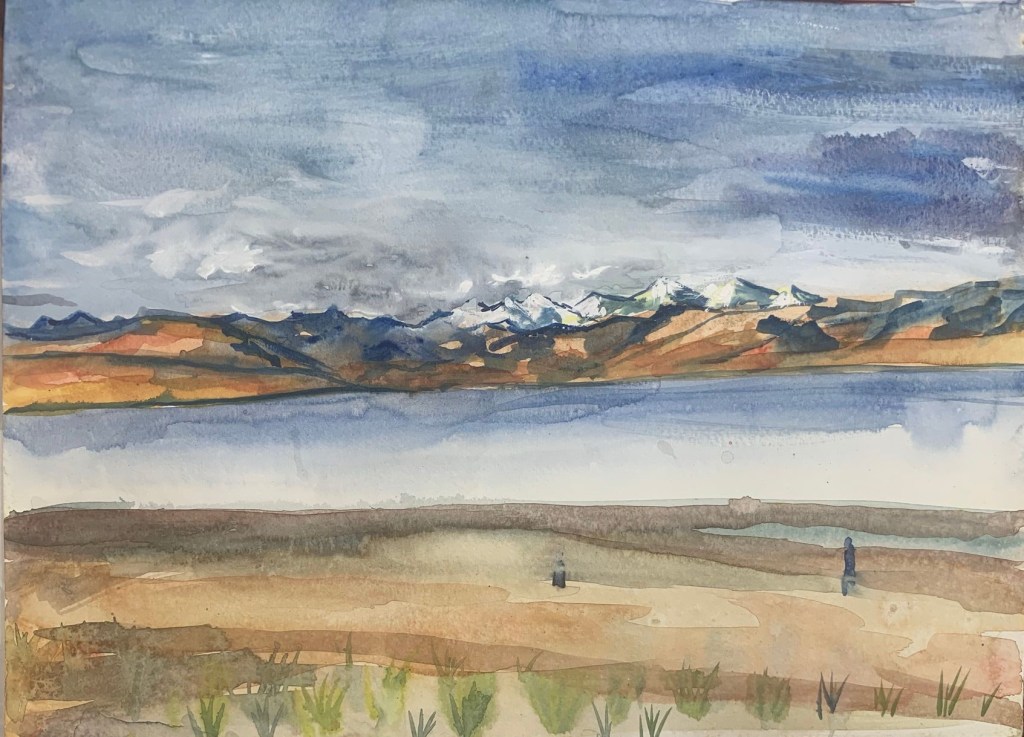
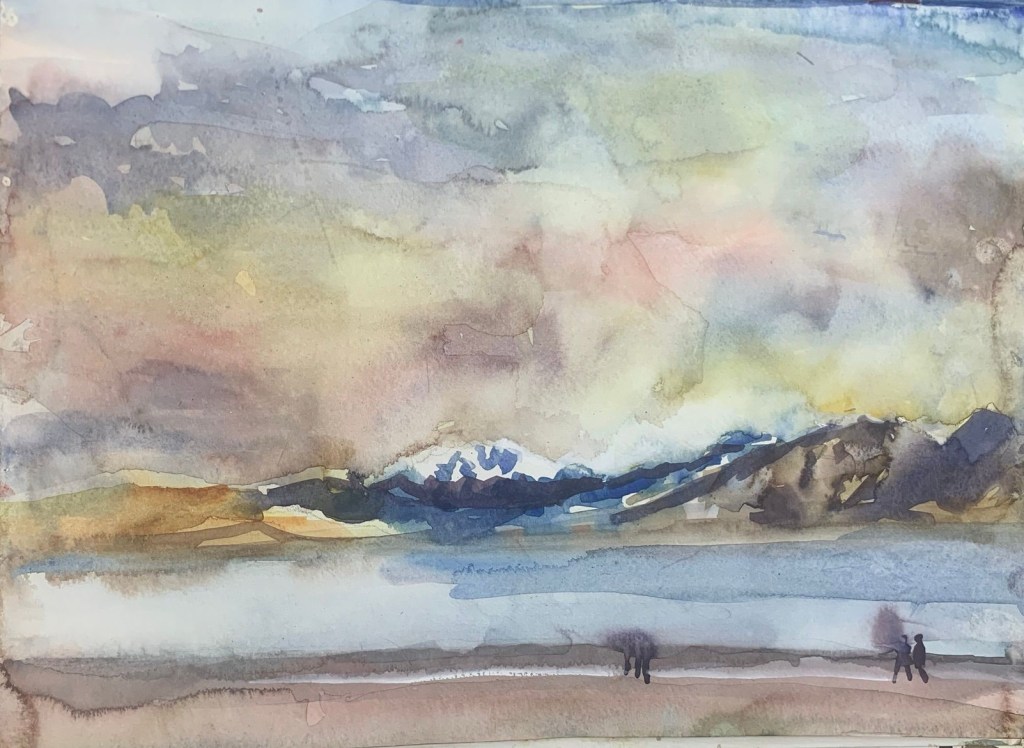
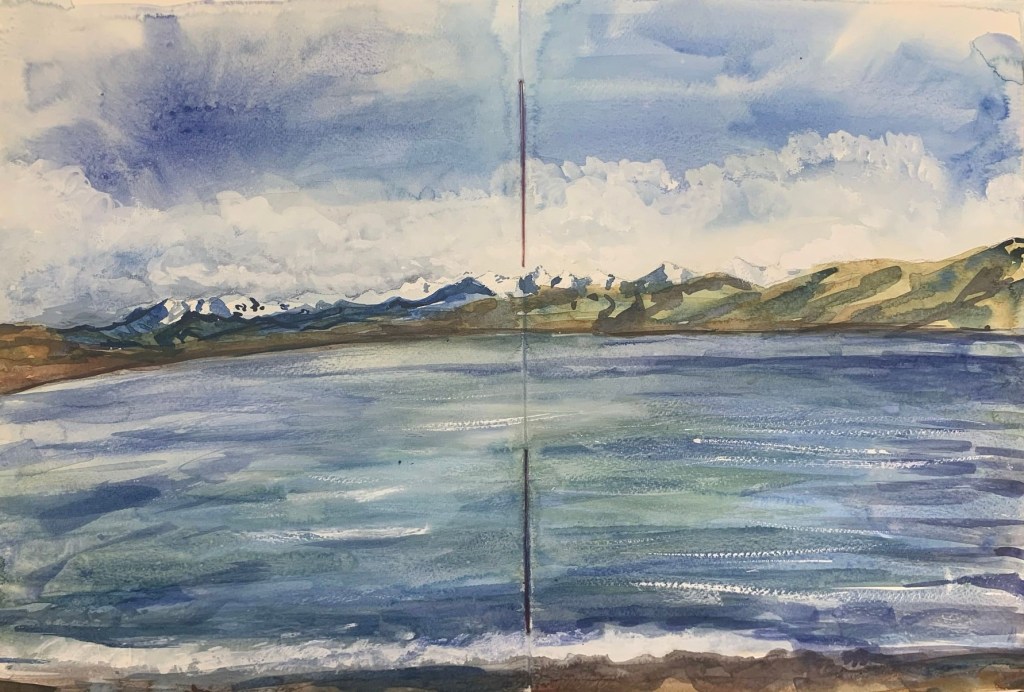
And then, beside all that movement, Tso Moriri lay still.
The lake held the sky and the mountains without comment.
I stood at its edge.
The boots on my feet were scuffed and dust-stained, their laces tied and untied across weeks of road and mountain. They had hitchhiked with me from the rubble of Jantar Mantar through rain, gravel and high passes, always moving.
Yet here, among people whose lives were measured in seasons rather than kilometres, that restless motion finally softened into something slower.
An ability to stop.
To stand on the same ground for a while.
To belong to a place instead of only passing through it.
Perhaps that was what the journey had been moving towards all along.
Not another road.
Not another ride.
Not another mountain to climb.
Arrival.
Later, when I unpacked the boots in the late-monsoon air of Mumbai, the leather still carried the pale dust of Changthang.
The dead skin on my arms and the hardened palms of my hands told the same story.
The hitchhiking was over.
The boots had carried me through protests and prayers, rain and dust, art and mountains, wrong turns and unexpected rides. They had been rebellious when I needed to move, an antenna when I needed to pay attention, and finally companions to a slower way of seeing.
Now the tension of my weight had finally been lifted from them.
They could rest in a corner and slowly wear out.
They had already done the harder work.
They had carried a restless body a very long way.
And somewhere along the way, they had taught it how to arrive.



Leave a Reply